

AI SaaS Product Classification Criteria in 2026, Encompassing Metrics, Frameworks, and Best Practices
Introduction:
Artificial Intelligence has played a significant role in transforming the SaaS (Software as a Service) industry into one of the rapidly growing sectors of technology.
The majority of SaaS products, including AI-powered CRM’s and cloud-based analytics platforms, claim innovation, but the market is flooded with look-alike tools.
So, with the explosion of AI-first SaaS products, it becomes crucial to draw a line between innovation and imitation, to make the evaluation of these platforms easier for businesses, customers, and investors.
AI SaaS product classification criteria serve the much-needed purpose here because, in this crowded SaaS ecosystem, businesses are at a high risk of comparing apples to oranges without a crystal clear classification framework.
An explicit classification framework allows cuMeta customers to compare products, evaluate their services, make more informed investment decisions, and also assist businesses in positioning their AI SaaS solutions.
In this guide, we will unfold that:
- What is the actual SaaS product classification criteria?
- Top classification frameworks and categories
- Cost-effective strategies for new and small businesses
- Best practices in 2026 for organizations
Let’s buckle down.
What is AI SaaS Product Classification Criteria?
Classification makes things easier for everyone by providing a common language for investors, customers, and retailers.
In simple words, AI SaaS product classification can be defined as a system for classifying automated SaaS applications into clear fragments based on:
- Functionality (which problem could it resolve)
- Technology stack (ML model, NLP, computer vision, etc)
- Industry Vertical (Healthcare, Marketing, etc)
- Target audience (startups, enterprises, etc)
- Compliance and governance standards
For your better understanding, a SaaS tool that employs AI for predictive analysis in finance would be categorized under AI SaaS analytics- FinTech. Similarly, SaaS platforms that supply AI chatbots to agencies could be classified as AI SaaS communication and fall under marketing tech.
This categorization assists in better decision-making for both providers and customers by enhancing transparency and reducing confusion.
Why Classification Matters in 2026
30,000 SaaS companies worldwide, along with AI adoption, have crowded the tech industry like never before. These skyrocketing figures emphasize the need for classification frameworks, shifting their status from optional to mandatory. It also highlights AI SaaS product classification criteria to be updated over time.
Businesses must focus on the classification because of:
- Market Differentiation: To remain ahead in a crowded SaaS AI ecosystem.
- Investment Clarity: investor-grade clarity allows investors to evaluate product market fit.
- Scalability planning: It helps you to align product classification with your long-term SaaS growth goal.
- Compliance & Regulation: It assists you in making sure that data handling is regulated by frameworks like GDPR, HIPAA, and SOC 2.
- Customer Trust: It helps in clarifying ambiguities of users about your tool and shows them exactly what your tool does and where it fits.
Core AI SaaS Product Classification Criteria in 2026:
Businesses should take care of the following criteria during stack-aware classification:
Functional Categories:
Functionality tops the list when customers are comparing SaaS tools. Products should be classified by what they solve.
- AI SaaS for Analytics: These tools transform raw data into actionable insights e.g, Business Intelligence, Predictive Analytics)
- AI SaaS for Marketing Automation: Analyze customer behavior in real time and help in streamlining marketing campaigns (Behavioral targeting, Customer segmentation)
- AI SaaS for Customer Support: Facilitate with instant and automatic assistance to customers (Chatbots, Virtual assistants)
- AI SaaS for Security: Ensure safety and security of businesses against cyber threats (Fraud detection, Risk monitoring)
- AI SaaS for Operations: save time and improve efficiency by automating repetitive tasks (Workflow automation, IT monitoring SaaS)
Technology Stack:
AI is the backbone of these products and reveals the depth of innovation behind them.
- NLP-based SaaS: This category supports functions such as conversational chatbots by processing human language to respond more efficiently (ChatGPT-like text models, sentiment analysis)
- Computer Vision SaaS: This category authorizes machines to interpret images and videos (Image recognition, facial detection)
- ML SaaS: These platforms employ machine learning to predict outcomes by identifying patterns(Recommendation engines, predictive algorithms)
- Voice AI SaaS: They convert voice into practical outputs (Speech recognition, virtual agents)
Industry Vertical:
Vertical SaaS focuses on precision. AI SaaS product classification criteria for industry verticals encompass the following categories:
- Healthcare AI SaaS: These platforms are designed for healthcare institutions such as hospitals and clinics (Diagnostics, medical imaging)
- FinTech AI SaaS: These categories are designed to serve financial institutions (Credit scoring, fraud prevention)
- Retail AI SaaS: Retailers take help from these tools to boost sales and win customer loyalty (Demand forecasting, personalization)
- SaaS for Education: This category helps in the advancement of educational institutions by offering personalized learning paths and virtual learning (AI tutoring, adaptive learning)
Compliance & Governance
Long-term sustainability relies heavily on regulation and governance. AI SaaS product classification criteria must meet global standards such as GDPR, HIPAA, and must take care of transparency through ethics.
- GDPR Conformance
- HIPAA ( SaaS for clinical care)
- SOC 2 Type II Certification
- AI Ethics & Algorithm Accountability
Business Model & Pricing:
The prices of AI SaaS products should be carefully designed while keeping all sizes of businesses in mind to make adoption easier for them. Prices must be fixed.
- Freemium AI SaaS
- Pay-per-use SaaS AI models
- Subscription-tier SaaS AI products
Evaluation Metrics for AI SaaS Product Classification:
Metrics put soul into classification and transform it from theory to quantitative practice. Benchmarking beyond marketing claims wins you reliability and customers’ loyalty. The following metrics are used by businesses while evaluating and classifying AI SaaS tools:
- Accuracy & Reliability – whether the predictions made by AI are reliable, and if yes, then to what extent?
- Adaptability – Is the SaaS able to handle workloads at an enterprise level?
- Compatibility – APIs, plugins, and cross-platform support.
- Trust-Regulation – Protected your data, secured, and up to the encryption standards?
- Total Cost-Effective – Cost of ownership (TCO) vs ROI.
- User Experience – Dashboards, automation workflows, simplicity.
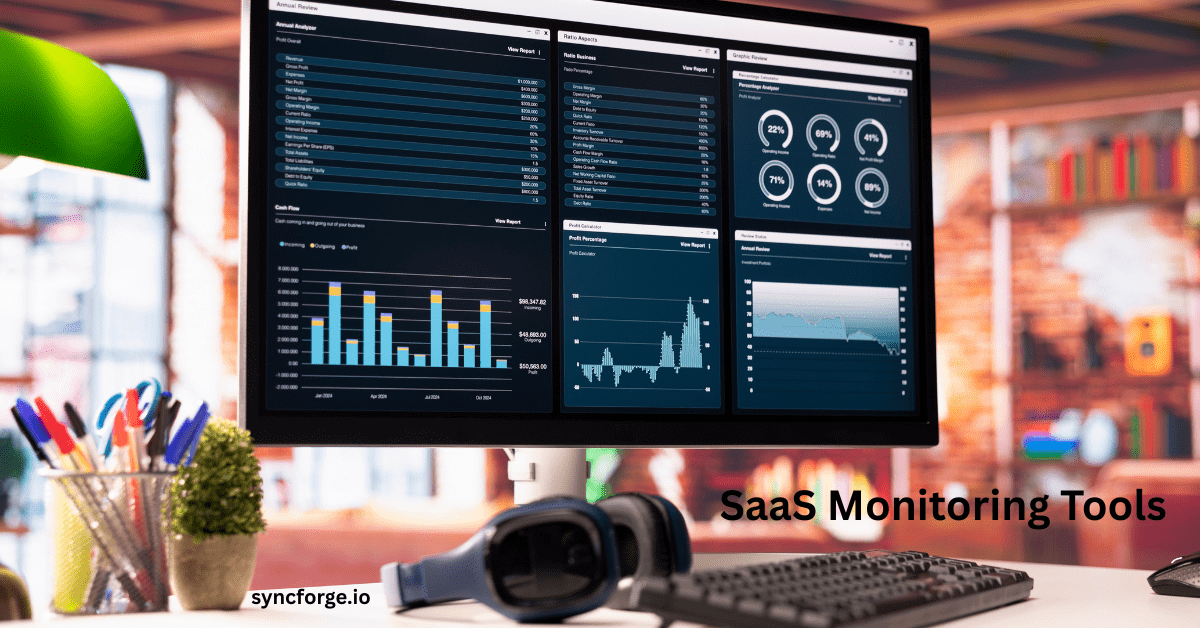
AI SaaS monitoring tools such as Datadog and New Relic are categorized based on their performance monitoring depth, integration options, and subscription tiers.
Cost-Efficient Strategies for Startups in 2026
Classification level strategy and growth-aligned pricing allow startups to hit their mark in the markets. AI SaaS startups and small businesses often lack enterprise-level budgets. To grow gradually, they should adhere to low-cost strategies.
- Hybrid open-source+SaaS: Startups can reduce cost by aligning free open source AI frameworks with lightweight SaaS add-ons and enjoy enterprise-level functionality. without overrunning their budget. For example, use tools like TensorFlow or Hugging Face models with affordable SaaS layers to cut the prices.
- White-Label SaaS options: Building from scratch can cause you to spend more, so reselling existing SaaS platforms under your brand is a wiser decision.
- Niche Classification: Avoiding competition with market giants and positioning your product in a hyper-focused vertical (e.g., “AI SaaS for dental clinics”) would be economical.
- Pay-as-you-grow pricing: Get your hands on pricing models that expand with usage rather than flat enterprise pricing.
Best Practices for Enterprises:
For big giants of the markets, the classification frameworks must be strong:
- Adopt AI SaaS Governance Frameworks – Large enterprises must use a governance framework to ensure ethical AI practices, making no compromise on their sustainability.
- Standardize Across Teams – Defining a common SaaS category is essential to align marketing, sales, and IT, which ensures that different teams are working with the same framework.
- Leverage Multi-Cloud Monitoring – It strengthens classification by keeping a close eye on SaaS performance and monitoring all other aspects.
- Invest in Benchmarking – continuously compare your SaaS tools with your competitors to stay competitive and to identify areas for improvement.
Future of AI SaaS Product Classification
The AI SaaS classification system is continuously evolving, and by 2030, it is foreseeable that regulation and industry-specific standards will make the AI SaaS product classification criteria framework more precise and up to date.
By 2030, the Future of AI SaaS classification is likely to be defined by automation, regulation, industry-specific standards, and making the AI SaaS product classification criteria framework more dynamic and precise:
- AI Maturity Models – the framework will rank the SaaS product based on its advanced AI capabilities; the stronger backbone of AI it has, the more rapidly it will grow.
- Self-Adaptive Classification System: It is predicted that by 2030, AI itself will start playing a vital role in classification by auto-categorizing SaaS tools when they evolve or update.
- International Regulatory Frameworks – In the near future, Governments have decided to define universal classification rules in AI SaaS for transparency and security.
- Industry-Specific Taxonomies – Each industry will develop its own unique benchmark, for instance, educational AI SaaS vs. clinical care AI SaaS benchmarks, which will guarantee that SaaS tools are aligned with the unique needs and requirements of various sectors.
FAQs
Q1: What is meant by AI SaaS product classification Criteria?
A: AI SaaS product classification criteria are the standards employed to classify AI-backed SaaS tools by their technology, industry, compliance, and pricing models.
Q2: What importance does classification hold for AI SaaS startups?
A: Classification provides clarity, enhances investor confidence, and supports products in standing out in crowded markets.
Q3: Will AI SaaS classification evolve with regulations?
A: Yes, definitely, classification will be impacted by ethical AI and compliance standards that would be prompted by the government.
Q4: Is a large budget necessary to use classification systems for startups?
A: No, by centralizing on niche categories, start-ups could use a classification system without overrunning their budget.
Q5: Which is the most important element in classifying AI SaaS tools?
A: Functionality is the most important factor in the classification of SaaS tools.
Conclusion
AI SaaS Product Classification Criteria has become a strategic advantage for businesses and customers. It aids in defining the position of the product in the market and attracting the right audience. In contrast, for enterprises, it serves larger purposes such as ensuring compliance, governance, and scalability.
By centralizing elements like functionality, technology, industry, compliance, and pricing models, businesses can classify their AI SaaS solutions more effectively and grow more quickly.
Whether you are starting or have hit your mark in the industry, understanding and applying AI SaaS product classification frameworks is extremely important. It will lead you to long-term growth in the AI-powered digital era.