

Top B2B SaaS Dashboard Features USA Companies Need in 2026
B2B SaaS Dashboard Features USA
Most SaaS teams in the US don’t lose momentum because of slow growth. They lose it because they’re flying blind. One dashboard shows a spike, another shows a dip, and a third hasn’t refreshed in two days.
We’ve seen product teams, sales rooms, and board meetings stall in endless debates over “which number is real,” quietly costing more than most leaders realise. A dashboard only works when it speaks the same language as the people who use it.
A dashboard should clear the noise, not add to it. When the structure is wrong, the business moves in circles. When it’s right, everything feels lighter. Decisions come quicker. Risks show up sooner. Teams stop arguing and start aligning.
That shift starts with the b2b saas dashboard features USA companies rely on for fast, confident judgment. Many guides focus on surface-level metrics. This one goes deeper into the setups, views, and functions that truly support a growing SaaS company.
What is a B2B SaaS Dashboard for US Companies
Many US SaaS teams struggle not because data is missing, but because it’s scattered across tools. A dashboard is a source of clarity because it displays all revenue trends, user behavior, and product health. The proper configuration, based on b2b saas dashboard features that USA teams rely on, assists leaders in acting swiftly and organizing teams.
US B2B SaaS firms adhere to trends such as product-led growth and accelerated ARR. Dashboards monitor trial conversions, feature adoption, and usage patterns, as well as convert raw numbers into actionable information. Regulations such as CCPA have an impact on design, which involves dashboards to present the information accountably, usually hiding the personal data or including audit logs.
Core KPIs include MRR, ARR, churn, payback period, and expansion revenue. Effective dashboards highlight these metrics with modern saas analytics dashboard features, data visualization features for saas, and real-time analytics for saas dashboard.
Customizable charts, role-based views, and interactive filters make insights obvious. These dashboards are not just displays; they guide decisions, reduce risk, and support growth with trusted data.
Key B2B SaaS Dashboard Features USA Teams Look For
In 2025, dashboards are changing fast. Leading US B2B SaaS companies move beyond static charts and embed data directly into decision-making. Below are the important b2b dashboard must-have features and some advanced trends not usually found in standard dashboard guides.
Key Metrics & KPIs
- Strategic Metrics: Payback period and LTV/CAC are kept central. More SaaS teams now track net revenue retention (NRR) as their North Star. Median NRR has dropped to ~101%, making retention and expansion more important than ever.
- Revenue Flow: Dashboards break down MRR and ARR by new growth, expansions, contractions, and churn.
- Behavioral Signals: Feature adoption, time to value, and trial-to-paid conversion predict long-term revenue, especially in PLG businesses.
- Retention & Expansion: Cohort-level churn analysis is now standard. Dashboards highlight upsells, product-qualified leads, and customer health scores.
- Advocacy Metrics: Net Promoter Score (NPS) and referral rates are moving into dashboards, showing the real voice of customers.
Real-Time Analytics & Predictive Intelligence
- Auto-refresh remains important. Leading companies layer AI-driven predictive analytics on top.
- Anomaly detection and real-time alerts help teams react quickly to usage changes or churn risk.
- Some dashboards use LLM-based insight tools that turn raw data into readable narratives.
Customization & Personalization
- Adaptive visual hierarchies let executives and product leads see tailored charts.
- “Drillboards” enable the user to dig deeper into data on their own demand.
- Date filters, segmentation tools, and widgets are also essential components.
Data Visualization & Storytelling
- The new dashboards also provide a visual guide to the user as they progress to an in-depth insight.
- Complex data are simplified using interactive features such as on-chart notes, data storytellers, and narrative tooltips.
- Minimalist design is on trend: fewer graphics, more action-oriented measurements.
UI & User Experience
- Role-based UIs remain significant. AI-driven personalization now dynamically shows the most relevant metrics, showcasing modern saas dashboard UI features
- Onboarding improves through voice, text, or pointer-based guides, helping new users learn dashboards faster.
- The trust and clarity are created through micro-interactions, e.g., the seamless transitions between different charts or live refresh indicators.
Integration, Automation & Scalability
- Close connection to CRMs, billing, customer success tools, and data warehouses is vital.
- Bi-directional APIs enable the use of a dashboard to make actions, such as tagging customers, automatically update other systems.
- Scalable dashboards are also in a position to support high user count, workloads and large scale data with minimal slowed speed.
Security, Compliance & Collaboration
- Standard is audit logs, role-based access, and encryption. Various platforms make compliance an option rather than a necessity.
- Real-time collaboration lets teams comment and annotate charts directly on dashboards.
These B2B SaaS dashboard features USA reflect the best dashboard features for b2b software today. They go beyond basic reporting to provide insight, growth, and trust.
Must-Have B2B SaaS Dashboard Features Checklist
Here is the quick checklist for B2B SaaS dashboard features USA:
- North Star Metrics: LTV/CAC, payback period, NRR
- Acquisition & Activation: Sign-ups, trial conversions, feature adoption
- Retention & Expansion: Churn, DAU/MAU, upsells, PQLs
- Real-Time Alerts: Auto-refresh, anomaly detection, live notifications
- Custom Views: Role-based dashboards, personalized widgets, date filters
- Data Visualization: Charts, heatmaps, pivot tables, trend lines
- Intuitive UI: Clean layout, modular widgets, guided onboarding
- Integration: CRM, billing, marketing, analytics, data warehouses
- Collaboration: Shared dashboards, comments, team access controls
- Security & Compliance: Encryption, audit logs, CCPA/enterprise compliance
This checklist gives a clear snapshot of B2B SaaS dashboard essentials. It shows what makes dashboards actionable, reliable, and growth-ready in 2025 as part of a complete business dashboard features list.
UX & Design Best Practices for B2B SaaS Dashboards
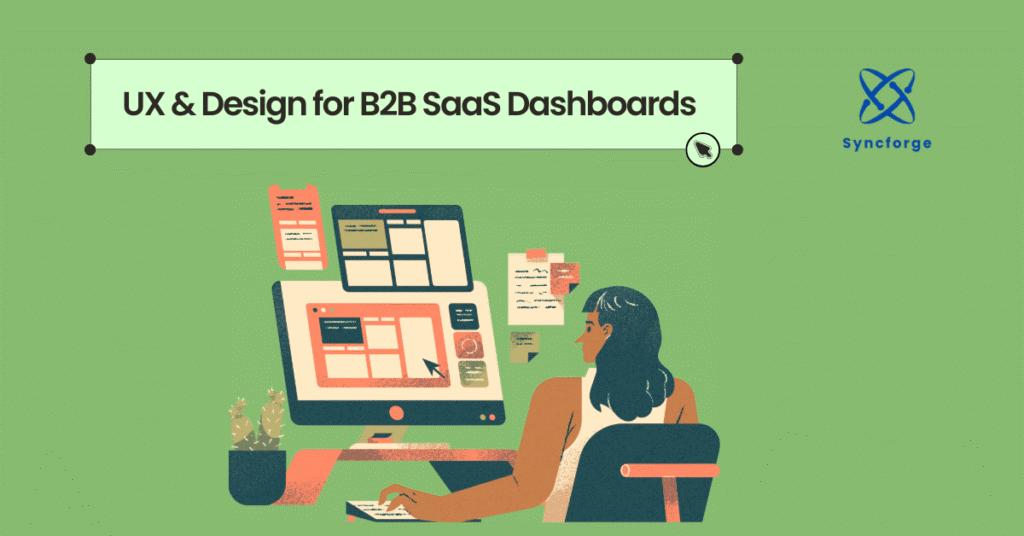
Design is just as fundamental as data. Metrics are easier to comprehend, and choices are made more quickly with the correct layout.
- Dashboard to Role Matching: Quick, real-time perspectives are essential for operational teams. Strategic summaries are beneficial to executives. Selecting the appropriate kind guarantees dashboards are trusted and used.
- Priority & Layout: Top metrics should be positioned above the fold. Make use of breathing room to prevent clutter. A clear graphic hierarchy shows the most important information at a glance.
- User Validation: If users are unable to do essential activities, a dashboard may appear well-designed but fail. Testing with real users guarantees that the b2b SaaS dashboard features that USA teams rely on are operational.
- Accessibility and Colour: Don’t use too many colours. To direct attention, use labels and contrast. Accessible designs help in the easy understanding of information. This clarity improves efficiency and encourages more people to use the dashboard.
A well-planned design balances function and simplicity, creating dashboards that are both practical and visually appealing.
Example Dashboard Setup for a US-Based SaaS Business
Think of a B2B SaaS company in the US that grows through product-led strategies. Customers register on their own, explore the features, and decide to buy after seeing the value.
- Dashboard Structure & Metrics: The dashboard turns user activity into clear, readable data. Teams can track behavior and make informed decisions quickly. Operational teams follow trial-to-paid conversions, feature usage, and daily active users. Product managers track attrition, expansion, and upsells closely.
- Real-Time Alerts: Automatic notifications help spot sudden drops in engagement or unexpected churn quickly. The teams can quickly react to any losses before they worsen further.
- Role-Based Customization: KPIs adjust to each user’s role, showing the most relevant data for better decisions. The dashboard can be made easier to use by moving widgets, sorting them by date, or separating them by account type.
Templates like Amplitude’s B2B SaaS dashboard show different layouts. They highlight the main factors that US businesses rely on for quick, informed choices.
Challenges & Common Mistakes in B2B SaaS Dashboards
Even excellent dashboards might fail if the design or data processes are inadequate. Many US SaaS teams confront challenges that diminish impact and trust.
- Overcrowded Dashboards: Too many metrics overwhelm users. Decision fatigue sets in when teams sift through charts searching for what matters. A clean, prioritized layout makes dashboards easier to read and act on. B2B SaaS dashboards used by US teams become much easier to read when the layout is clear and metrics are prioritized.
- Ignoring Data Context: Metrics without context, like timestamps, update info, or data freshness, can confuse teams. Mistakes happen when decisions rely on old data. Dashboards must show the date of the latest data update in an easily understandable format.
- Bad Event Tracking and Taxonomy: Analytics can only work well when events are tracked in the correct manner. The misfortune of labels, the inconsistency in names, or some missing events leads to false understanding and poor decisions. A dashboard is really useful due to accurate monitoring and consistent organisation.
- Failure to update: Dashboards should be flexible. Dashboards need to be adjusted every time there is a change in team structures, KPIs, and products. A static dashboard rapidly loses value.
Avoiding these pitfalls enables businesses to create dashboards that provide clarity, speed, and trust in all decisions.
FAQs: B2B SaaS Dashboard Features USA
Do I need separate dashboards for internal analytics and customer-facing analytics?
Many SaaS teams ask this. Product analytics tools (like Amplitude) are great for internal insights but often lack proper permissioning to safely share detailed dashboards with customers. Some community members strongly recommend using a BI or embedded analytics tool for customer-facing dashboards, rather than trying to force one tool to do both.
How responsive should a B2B SaaS dashboard be?
It depends on your users. Large monitors can be best served by a fixed layout that is large monitor-friendly. Other people recommend that the primary data be sticky, and side panels be movable, or making the rows flexible with cards. This avoids making the view too stretched out or confusing.
Is Google Analytics 4 still useful for B2B SaaS?
Yes, it is useful if it is implemented well. Some B2B SaaS teams set it up wrongly, or don’t tie it to product events, which limits its usefulness. GA4 provides crucial information about web traffic, conversion paths, and funnel drop-offs.
Wind Up
Smart dashboards change how teams work. For US B2B SaaS businesses, implementing b2b saas dashboard features USA, such as live analytics, intuitive UI, and customizable views, keeps teams aligned and proactive. Cluttered layouts and stale metrics diminish a dashboard’s effectiveness.
When you blend simple design, practical insights, and effortless integration, dashboards become genuinely useful. They go beyond just displaying data; they empower teams to make quicker decisions, spot emerging patterns, and foster lasting business expansion.