

SaaS Payment Processing: Top Platforms, Key Features & Global Challenges in 2026
What is the SaaS Payment Processing Features?
In the fast-paced world of software-as-a-service (SaaS), everything is digitised and happening in the blink of an eye.
Buying a subscription and instantly paying for it makes the process smoother than ever before, but have you ever wondered how brands like Slack and Zoom manage millions of their transactions every single day? How does payment processing work behind the scenes?
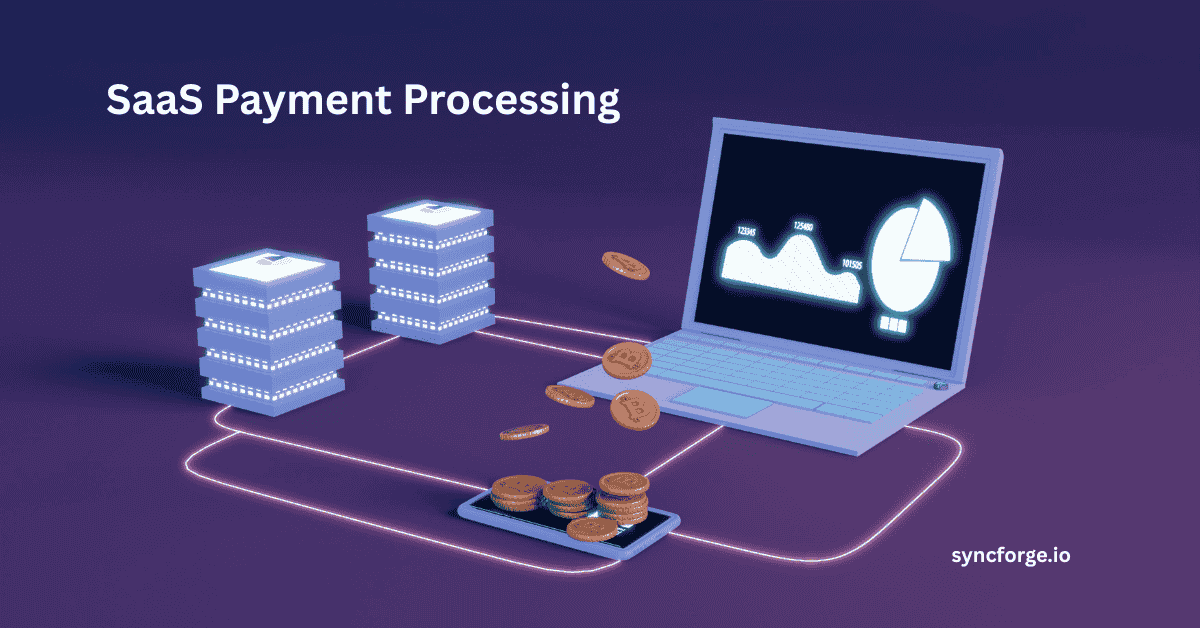
SaaS payment processing is the process of handling transactions between businesses and their customers, either for one-time payments or monthly renewals and upgrades. An invisible engine of Advanced SaaS Payment Processors works behind this system to power recurring revenue and ensure smooth and secure payment, and manage thousands of transactions processed every single minute.
Without these systems, it would be infeasible to manually maintain these operations because Payment processing is not just about collecting money but ensuring reliability, security, and predictable revenue systems. SaaS payment processing provides stability to your business by offering a level playing field for growth and scaling.
Why Payment Processing Matters for SaaS Business:
Monthly Recurring Revenue (MRR) is the heart and soul of every SaaS business, as it indicates momentum, customer value, and stability of business. It is unachievable to maintain a steady cash flow without an efficient SaaS payment processing system. Let’s have a look at why SaaS businesses cannot stand alone without payment processing systems:
Automates Cash Flow:
SaaS businesses are built on recurring subscriptions; hence, automation becomes indispensable. It is impossible and inefficient to manually manage payment processing and renewals. Can you imagine the frustration of manually tracking every subscription renewal?
SaaS payment processing ensures steady cash flow and handles your transactions, making you and your team free from chasing payments.
Minimises Failed Payments:
Failed payments are the worst nightmares of any subscription-based business. It could result from several reasons, including insufficient balance and expired cards. However, today’s systems are more advanced and offer retry to reduce payment failure and ensure continuous cash flow without any hindrances.
Supports Global Customers:
SaaS businesses usually serve global markets, so they have to accept payments in multiple currencies, which emphasises the need for diverse payment methods.
SaaS payment processing systems like Paddle address these pain points by simplifying the process and empowering businesses to collect payments from around the world without any hiccups.
Improves Customer Experience:
A slow and complicated payment processing system adds to the frustration of customers, leading to increased chances of customers abandoning their subscriptions or leaving the process incomplete. Conversely, uninterrupted and consistent checkouts pave the way for fewer drop-offs and higher conversion rates.
Ensures Compliance:
The growing dependence on technology increases the need for strict regulations, especially around payment data. SaaS businesses must abide by regulatory standards like PCI-DSS and GDPR to avoid any legal inconvenience. SaaS payment processor ensures that these compliance requirements are fulfilled, making you worry-free.
How SaaS Payment Processing Works?
Let’s explore the step-by-step process of payment processing and find out what happens when a customer subscribes to a SaaS service.
1. Sign-UP
If a customer is interested in buying a subscription, they first have to choose a pricing plan, which varies based on the time period and consumption, e.g., monthly, annual, or if you are buying for yourself or your whole team. Then the customer enters their payment details to complete the transaction.
2. Secure Payment Gateway
Then, payment processors securely fetch customers’ payment details through encryption. Payment data is very sensitive, and it has to be protected during transactions to win your customers’ confidence and sustain your brand image. Popular gateways like Stripe and Paddle leverage advanced encryption to overcome these challenges.
3. Tokenization
To prevent data breaches, these payment processors assign unique tokens to every real card, and instead of storing sensitive payment information, they use tokenization to replace real card data with tokens. It adds an extra layer of security to transactions, making the data more secure and safer.
4. Recurring Billing
Once the payment is successfully processed, the automated process keeps track of the billing cycle and automatically charges the customer at the next billing cycle without any manual intervention, saving time for both the customer and the company. It ensures a continuous and seamless service and revenue.
5. Invoice & Receipt Generation
An automated invoice is instantly generated and sent to the customer’s email and synced with accounting tools as well, ensuring transparency and accuracy at both ends.
6. Renewal & Dunning
If a payment fails due to any uncertain or unavoidable issues, the system retries the payment and sends reminders to customers as well to prevent involuntary churn and ensure that customers who are interested in using the service can continue to do so without any hindrances.
The whole process is automated, requiring little to no human intervention.
Key Features of Top SaaS Payment Processing System:
The market is crowded with payment processors. A blind pick is incapable of yielding optimal results. You have to make a wise pick by considering the following features. Let’s see how the right payment processing system optimises your SaaS business operations and revenue.
| Feature | What It Does | Why It Matters |
| Recurring Billing | Automates monthly/annual renewals | Automates cash flow and reduces manual work |
| Subscription Management | Control upgrades, downgrades, cancellations | Empower businesses to offer flexibility to users |
| Multi-Currency Payments | Accepts USD, EUR, GBP, and more | Eliminate currency barriers |
| Tax & Compliance Automation | Adds VAT, GST, or regional taxes | Reduces manual tax calculation and prevents errors |
| Invoicing & Receipts | Auto-generates branded invoices | Builds trust and keeps accurate financial records |
| Analytics Dashboard | Shows revenue trends, churn, and MRR | Provide useful insights that inform business strategy |
These features certify if your payment processing system is capable of handling complex operations and can scale with your business without slowing down its performance.
Global SaaS Payment Challenges:
Although SaaS payment processing offers numerous advantages b perfection is a lie. There are certain challenges associated with these systems when operating globally. Let’s check out the problems and their solutions:
Challenge: Failed Payment (Involuntary Churn)
Payments may often fail due to expired cards and insufficient funds, which may frustrate the customer, and he may run away without purchasing.
How to overcome it:
Few Payment processors offer an Intelligent Retry mechanism that addresses this pain point and keeps the customer from running away.
Challenge: Cross-Border Payments:
Businesses operating across the border suffer difficulties like managing currency conversion fees, International Taxes, and varying regulations based on region
How to overcome it:
Systems like Paddle ease your difficulty by automatically handling currency conversion and tax compliance
Challenge: Compliance Complexity:
Every region has varying regulations, such as PCI-DSS and GDPR etc.
How to overcome it:
Make wise decisions while picking payment processors. Pick the one that adheres strictly to international regulatory frameworks.
Challenge: Security Concerns:
Protecting sensitive payment information from data breaches is the biggest challenge.
How to overcome it:
Select payment processors leveraging SCA and tokenisation for advanced security. As both of them add an extra layer of security to your data, making it more secure.
Challenge: Integrations
SaaS businesses do not rely on a single tool. They have an ecosystem of multiple tools working together.
How to overcome it:
Choose a payment processor that integrates seamlessly with your existing CRM and accounting tools.
Best SaaS Payment Processing Platforms in 2026:
The following are a few market leaders in payment processing. You can choose between them depending on your requirement.
Let’s have a look at how each of these payment processor streamline your SaaS billing and reduces operational complexity.
- Stripe Billing:
Stripe Billing is an easy-to-use platform offering a robust API for harmonious blending. It facilitates businesses by automating recurring billing, managing subscriptions, and global payments while handling tax automation and preventing fraud.
It helps businesses expand their services to international audiences, removing multi-currency barriers. It offers flexible pricing models tailored to the needs of the masses, such as tiered pricing or usage-based models.
- Paddle:
This all-in-one solution performs multiple duties, such as managing taxes, payments, and compliance in one platform. It is ideal for businesses that have an international audience because it offers multi-currency transactions.
This user-friendly platform is designed to be API-first, which makes it very easy for SaaS businesses to integrate this service into their applications without putting any extra effort.
- ChargeBee:
This billing and revenue management platform also automates the whole order-to-revenue process. It itself is not a payment gateway, but can be integrated with almost 30 third-party payment gateways, and is ideal for enterprise-level businesses that require robust back-end integrations.
Its functions include recurring billing, dunning, global scalability, and much more. It works best with HubSpot and Salesforce.
- Recurly:
It minimises the failed payments by offering intelligent payment retry systems, which automatically lead to a reduction in churn rates. Recurly is responsible for Revenue optimisation and has built in advanced reporting tools that instantly deliver ready-to-share professional reports for finance teams.
- Braintree (PayPal)
This end-to-end processor allows businesses to accept payments online and on mobile devices. Braintree is powered by PayPal and is the most trusted global payment solution, delivering premium-level security and reliability. It’s mobile-friendly and can process payouts to almost 200 markets.
So, among these, which payment processor will work best for you?
How SaaS Payment Processor Reduces Churn?
Churn is the enemy of any subscription-based business, as increased churn equals decreased growth. Payment processors play a significant role in reducing churn rates, as they have advanced tools.
- If a payment fails, these tools offer smart retries, which save the customer from running away.
- They also send payment reminders to customers and inform them a week ago, if their subscription is going to end, and whether they want a renewal or not. It also reminds customers if they left in between purchases.
- These processors offer account update automation that automatically renews the subscriptions without missing deadlines.
- Many platforms leverage AI-powered machine learning that is capable of identifying risky transactions.
- These payment processors significantly improve customer retention and MRR stability by streamlining SaaS payment processing. It increases customers’ confidence in the application and reduces the risk of involuntary churn.
Real World Scenario:
To walk through the whole process and understand it more properly, let’s assume that you have developed your own SaaS platform named Desgnify. Its monthly subscription fee is $25/month, and your customer base reaches 10,000 users in multiple countries.
How would you juggle too many balls? It is impossible to handle all data manually, including the payments, keeping track of deadlines, renewals, taxes, compliance, and customer payment data. Even a 100-person team will be insufficient for this.
However, these SaaS payment processors have made life easier by automating these time-consuming and energy-draining tasks. For example, Stripe Billing simplifies the whole process by providing instant analytics and compiling everything into a single dashboard.
What are the Future Trends of SaaS Payment Processing in 2026?
We can expect these processors to feature AI-driven fraud protection to offer higher data security. Moreover, crypto and alternative payment options will enter the mainstream.
Furthermore, no-code workflows can empower businesses to set up their own billing system without any technical expertise. Automated financial forecasting can optimise the process further by helping businesses predict future cash flow.
As the companies grow, trends continue to evolve with the flow of time. Only those will survive in this competitive, saturated SaaS market who are not just prepared for today but tomorrow as well.
Conclusion:
SaaS payment processing is not just a financial formality but a lifeline for every subscription business that simplifies lengthy, time-consuming, and tiring payment processes by automating them.
Whether you are a startup, founder, or enterprise, this payment infrastructure gives you stability by offering smart, secure, and automated transactions that keep you worry-free and save your time to focus more on strategies and creativity.
FAQs:
What are some common challenges in SaaS payment Processing?
Failed payments, security issues, and cross-border payments are the biggest challenges of SaaS payment processing.
What are the top SaaS payment processors of 2025?
Stripe, Paddle, and Chargebee are leading and prominent payment processors of all time.
Is my data secure with SaaS payment processors?
Yes, because these standards firmly adhere to regulatory standards like PCI, DSS, and GDPR, and use tokenisation to keep your data safe and secure.
How do I know which payment processor is best for my business?
Carefully examine integration and recurring billing capabilities before committing to any tool.
What are the key features of a reliable SaaS payment Processor?
Tax automation, invoicing, recurring billing, and subscription management are some of the most valuable features of these cloud-based payment processors.
CTA:
Take charge of your revenue today! Streamline your payment processing system with SaaS. Learn more about SaaS on Syncforge.